
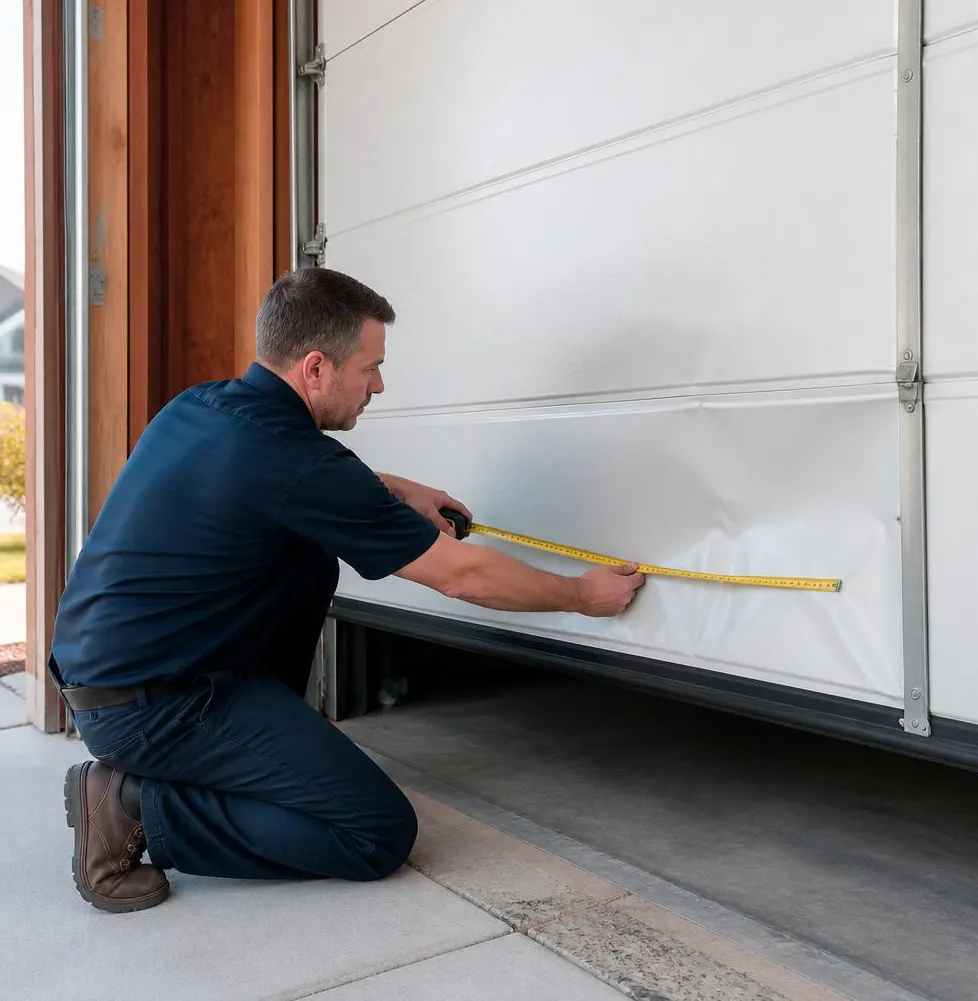
What a Service Call Usually Looks Like
On a typical cold-weather call around Manchester, the homeowner has already tried the obvious things: pressing the remote twice, pulling the emergency release, maybe tapping the bottom of the door with a boot to break it loose. By the time we get there, the door is usually stuck an inch or two off the slab with a thin skim of ice along the bottom seal, or it's open but creeping up the track in slow motion while the opener motor strains and clicks. Sometimes the door reverses itself halfway down and won't latch. None of this means the door is broken — it usually means cold, moisture, and old lubricant are working against the hardware all at once.
The Symptoms Worth Naming
- Door won't move at all when the opener is triggered, and the motor hums or clicks without lifting it
- Door lifts but feels unusually heavy, or the opener strains partway up
- A visible or audible crack as the door breaks free from the floor
- Door reverses on its own before fully closing
- Rollers squeal or grind, especially in the first few feet of travel
- Door closes unevenly, with one side dragging behind the other
What a Technician Checks, in Order
1. Ice Bonding the Door to the Floor
This is the first thing we look for, because it's the most common cause after a hard freeze following a thaw. Snowmelt, road salt spray from the driveway, or water tracked in from a vehicle pools along the bottom of the door and refreezes overnight, gluing the rubber weatherstrip to the concrete. The fix here is simple: gently break the seal with a wide, flat tool (not force on the opener, which can strip gears or bend the track), then clear the slab and apply a silicone-based garage door lubricant to the seal so it doesn't bond again. We don't recommend hot water to melt the ice — it just refreezes faster and harder.
2. Thickened or Dried-Out Lubricant
Standard grease and some all-purpose oils thicken in deep cold, which adds resistance right when the opener needs the least. If the rollers, hinges, and track are gummy or dry, the fix is a full relube with a lubricant rated for cold temperatures, applied to the rollers, hinges, and torsion spring coils — not the track itself, which should stay clean and dry so dust and salt grit don't build up on it.
3. Spring Tension Loss in Extreme Cold
Metal contracts as it gets colder, and torsion springs can lose a small amount of effective tension on the coldest days, which is enough to make a properly balanced door feel noticeably heavier. If the door is hard to lift by hand with the opener disconnected, this is often the reason, especially on older springs that have also picked up surface rust from humidity and road salt carried in on tires. The fix is spring adjustment or, if the springs are rusted, pitted, or near the end of their cycle life, replacement. This isn't a DIY repair — torsion springs are under heavy tension and need the right tools and training.
4. Rollers and Track Condition
Plastic rollers get brittle in the cold and can crack or flat-spot, and steel rollers without sealed bearings seize up faster when grease stiffens. We also check the track for ice buildup inside the channel and for any bend that happened when someone tried to force a frozen door open with the opener. Worn rollers get replaced; a bent track gets straightened or swapped depending on how bad the damage is.
5. Opener Force and Limit Settings
If the door is heavier than usual from cold-stiffened springs or rollers, the opener's force settings may no longer match, which is why doors reverse mid-close or the motor strains without lifting. Once the mechanical issues above are fixed, we check the opener's force and limit settings and adjust them to match the door's actual resistance. Running the opener against a door that's too heavy for its settings, over and over, is what burns out motors and strips gears.
6. Weatherstripping Condition
Vinyl bottom seals get stiff in deep cold and crack more easily, which both weakens the seal against drafts and increases the chance it freezes to the slab again. If the seal is cracked, flattened, or no longer sitting flush, replacing it is inexpensive and worth doing before winter fully sets in.
When to Call Manchester Garage Door Pro
If your door is freezing to the floor repeatedly, feels heavier than it used to, or the opener is straining and reversing, it's worth having it looked at before a spring lets go or the opener burns out trying to compensate. We offer garage door maintenance to get rollers, hinges, and springs lubricated and adjusted for winter, and spring replacement when tension loss or corrosion has gone past the point of adjustment. We'll walk the whole system, explain what we find in plain terms, and fix what actually needs fixing — not sell you a new door you don't need.
If your garage door is sticking, straining, or freezing shut this winter, call Manchester Garage Door Pro for fast, honest service throughout Manchester, MI and the surrounding area.